
What is a Patch Tattoo?
A PATCH TATTOO IS DESIGNED TO
look like something it’s not.
At first glance, it shouldn’t read as a tattoo at all.
It should make you pause. Look closer. Question what you’re seeing.
Because what you see shouldn’t be possible —
yet it’s right there on the skin.
Because what you see shouldn’t be possible — yet it’s right there on the skin.
WHERE DOES IT CAME FROM?
The style was pioneered by Eduardo „Duda” Lozano around 2019, who pushed it to a level where the illusion became almost unsettlingly real.
Since then, many artists have explored it — with very different levels of precision and understanding.
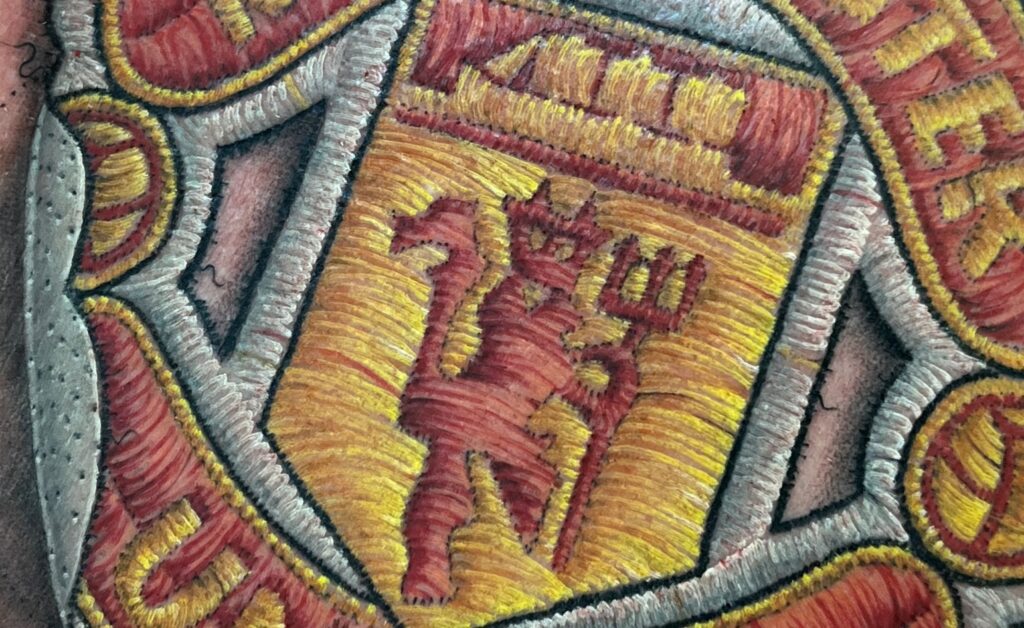
NOT JUST A TECHNIQUE — A VISUAL SYSTEM.
Patch tattooing is not an effect.
It’s a system built on light, color, and structure.
Without this system, you can create something that looks like embroidery —
but not something that truly fools the eye.
The illusion only works when multiple elements align:
- direction of the “threads”
- light and shadow behavior
- subtle color shifts within each stitch
- small, intentional imperfections
This is what convinces the brain —
even when it doesn’t want to believe it.
WHEN DOES IT REALLY WORK?
The style works best when the design itself already makes sense as a real patch.
Characters, logos, lettering —
or any concept you could realistically imagine as a stitched piece in the real world.
FUSION AND NEXT-LEVEL EFFECTS
The next step is combining patch with other styles —
like linework, black & grey, or color realism.
Here, two different types of illusion interact at the same time —
and when done right, they amplify each other.
FINAL THOUGHT
A patch tattoo is not successful because you recognize it.
It’s successful when it makes you hesitate —
even just for a second.
If you’re thinking about getting one, there’s one thing to understand:
This style doesn’t rely on details alone.
It relies on a system — and how well that system is executed.
And that depends entirely on who creates it.
(Endi)